
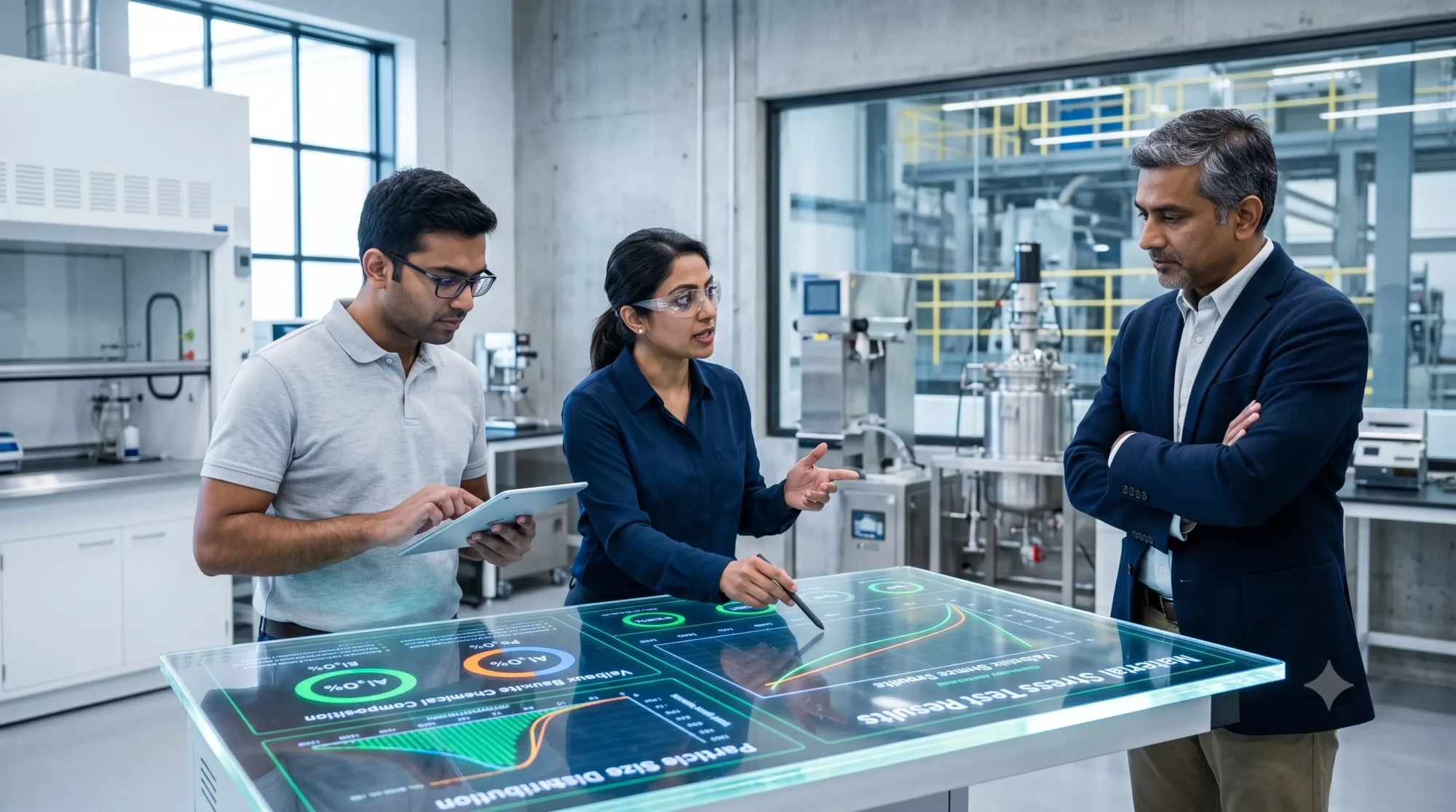
Most industrial buyers fixate on the headline alumina percentage when evaluating bauxite. That’s a natural starting point, but often just the beginning of the real conversation. The difference between good and great bauxite for your application isn’t just the Al2O3 number; it’s the nuanced interplay of other elements, particle size, and consistency. Get these wrong, and the true cost isn’t the initial purchase price, but compromised product performance, increased energy consumption, or premature refractory failure downstream. Understanding Valbaux technical specifications means understanding how the ore performs in your kilns, furnaces, or mixers, revealing its true value.
Beyond the Assay: What Valbaux Technical Specifications Really Mean for Your Operations
High alumina content has long been considered king in the bauxite industry, and for many applications, it is. But raw material, however rich in Al2O3, is only as good as its suitability for your specific process. We’ve seen firsthand how a slight deviation in silica, a spike in iron, or an inconsistent particle size can derail an entire production run, costing far more than initial material savings. Valbaux technical specifications aren’t just lab numbers; they promise performance, consistency, and reliability tailored to industrial demands.
Requirements vary across sectors. Refractory manufacturers need high Al2O3 calcined bauxite, but also extremely low iron (Fe2O3) and titania (TiO2) to prevent fluxing and maintain thermal stability. A cement producer, however, might tolerate higher iron (even finding it beneficial as a fluxing agent), but will be acutely sensitive to silica levels and grindability. One size rarely fits all. Look, it’s not just about hitting a number. If your process can’t handle it, that ‘premium’ material is just expensive scrap. Our approach at Valbaux involves delving into your operational realities, understanding metallurgy, thermal profiles, and finished product performance criteria before recommending a specific grade. We aim to be a partner, not just a bulk material supplier.
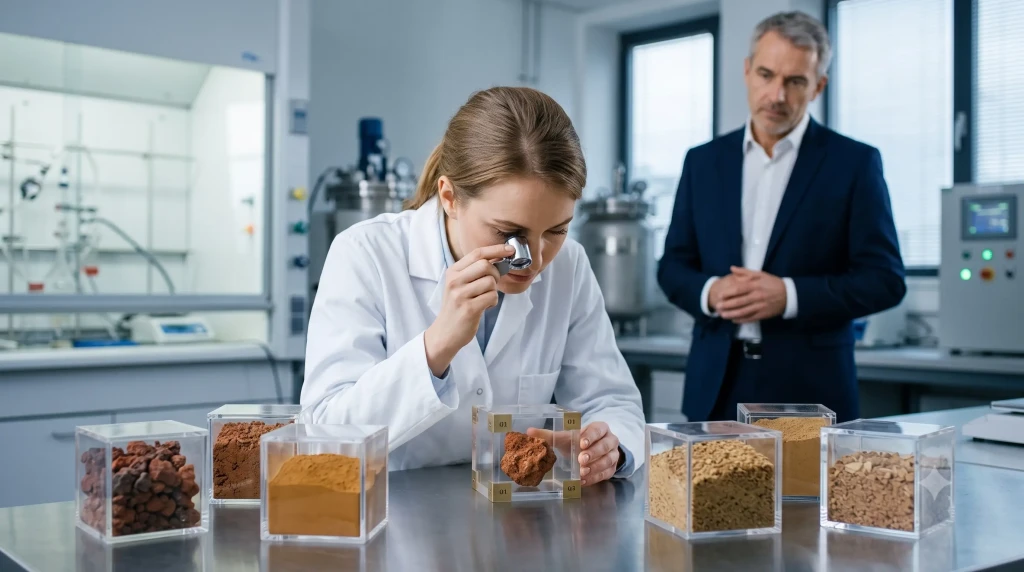
The Core Chemical Parameters: What Really Matters Beyond Alumina?
Key chemical parameters on any Certificate of Analysis (CoA) include Al2O3 content, a primary focus. High-grade calcined bauxite typically ranges 87-90%+ Al2O3; raw bauxite is lower, often 45-55%. Impurities, not just the primary component, often dictate usability and cost.
Is a higher Al2O3 always better for my application?
Not necessarily. While higher alumina generally implies superior refractory performance, improved abrasion resistance, or greater aluminum yield, it comes at a cost. Sometimes, the incremental benefit of moving from 88% to 90% Al2O3 doesn’t justify the price premium, especially if your process tolerates slightly lower purity without significant impact. For instance, some abrasive applications even desire a certain percentage of iron for specific properties. Striking the right balance for your end-use and budget is key. We help clients optimize this, ensuring they don’t overpay for unneeded purity. They offer various Al2O3 levels tailored for different industrial needs.
How much do minor elements truly impact my bottom line?
Minor elements, even in small percentages, can have disproportionately large effects. Consider silica (SiO2). In refractories, high silica reduces refractoriness and increases creep under load, forming low-melting eutectics with alumina that compromise structural integrity at elevated temperatures. For aluminum production, silica ends up in costly red mud disposal. We typically aim for SiO2 below 8% for refractory grades, often significantly lower for specialized applications. Honestly, this is where most teams get burned. You can’t just glance at the Al2O3 and call it a day.
Next, iron oxide (Fe2O3). It acts as a flux, lowering bauxite’s melting point, detrimental in high-temperature applications like ladle linings or kiln furniture. It also imparts color, problematic for white cement or certain ceramic glazes. We offer low-ferric grades where Fe2O3 is tightly controlled, often below 2%. Conversely, for some applications like iron ore sintering, a controlled amount of iron in the bauxite can be advantageous.
Titanium dioxide (TiO2) is another flux, though less potent than iron. In refractories, it can form titanium nitrides or carbides, potentially affecting performance. For synthetic rutile production, it’s the target element. Generally, we keep TiO2 below 4% for most industrial bauxite grades. Finally, Loss on Ignition (LOI) indicates volatile content, primarily water and organic matter. High LOI in calcined bauxite points to incomplete calcination; you’re paying for material that will lose weight and shrink further in your process, leading to inconsistencies and energy waste. Our calcined bauxite typically shows LOI values well under 0.5%, reflecting thorough processing.
Trace elements like alkalis (Na2O, K2O) are highly problematic, particularly in refractories, leading to alkali attack and spalling. Phosphorus (P2O5) can also pose issues in certain metallurgical processes. We rigorously monitor these to meet stringent specifications. This detail in our technical data sheets sets Valbaux apart, providing confidence that the material will perform as expected.

Physical Properties: Particle Size, Density, and Consistency
Chemical composition is half the battle; physical properties are the other. Getting the right chemistry is vital, but if particle size is off, your process will struggle. This isn’t a theoretical concern; it’s a daily operational reality for our clients.
Can I really customize bauxite particle size for my process?
Absolutely. Particle size distribution (PSD) is often as vital as chemical purity. For refractories, a carefully engineered blend of coarse, medium, and fine particles achieves optimal packing density, strength, and reduced porosity. Too many fines lead to excessive shrinkage and cracking; too many coarse particles result in poor packing and low strength. Valbaux offers bauxite in various standard sizes, from lumps and grains (0-40mm, 1-3mm, 3-5mm) down to fine powders (100 mesh, 150 mesh). We also provide custom grinds and specific PSDs. Our processing facilities allow precise control over milling and screening, ensuring material fits your specific requirements for aggregates, binders, or fillers. Consistency here is paramount; varying PSDs can throw off your entire batch process. Seriously, this is where the real headaches start. A consistent PSD means fewer surprises on the plant floor.
Beyond particle size, consider bulk density and specific gravity. These directly affect material handling, storage, and batch weighing. A consistent bulk density ensures predictable feed rates. For calcined bauxite, higher bulk density generally indicates denser, more thoroughly calcined material, translating to better refractory performance. We maintain tight controls on calcination to achieve consistent densities, typically 3.0-3.2 g/cm³. This commitment to consistency across all physical parameters is a core part of our quality assurance program.
The Valbaux Quality Assurance Edge: More Than Just a CoA
You’ve seen Certificates of Analysis. They’re important, but just a snapshot. Real assurance comes from the process behind the CoA. At Valbaux, quality control begins at the mine face. We conduct geological surveys, selective mining, and rigorous ore sorting to ensure raw material entering our beneficiation plant meets initial thresholds. This isn’t just digging and shipping; it’s strategic extraction.
Processing involves crushing, washing, screening, and for calcined grades, high-temperature rotary kiln calcination. Each stage has multiple checkpoints. Samples are taken at various points: post-crushing, pre-calcination, post-calcination, and before dispatch. Our in-house lab analyzes these using X-ray Fluorescence (XRF) for elemental composition, laser diffraction for particle size, and standard wet chemistry. We don’t just test; we trend. We track data over time to identify potential specification drift, allowing proactive intervention. This continuous monitoring, combined with our experienced team and robust protocols, underpins bauxite reliability. It’s how we ensure our solutions for various industries are consistently high quality.
Purchasing industrial minerals is a high-stakes decision. The wrong bauxite can lead to production downtime, product recalls, and significant financial losses. That’s why we invite clients to engage with our technical team, visit our facilities, and understand our meticulous steps. It’s about building trust through transparency and competence. When you choose Valbaux, you’re not just buying bauxite; you’re investing in a consistent, reliable feedstock that supports your operational excellence.
Decoding bauxite specifications goes beyond reading a datasheet. It’s about understanding each parameter’s practical implications for your application, recognizing subtle performance impacts, and trusting your supplier for consistent delivery. We believe a well-informed buyer is our best client, committed to providing detailed insights and reliable products for your success.
The marketplace is full of suppliers claiming “high quality.” Our reputation, built on years of delivering precisely what’s specified, speaks louder than marketing claims. We encourage you to scrutinize our data, compare offerings, and challenge us with your most demanding requirements. That’s how we build strong, lasting partnerships. When it comes to Valbaux technical specifications, we stand by every number, every grade, and every shipment.
The Road Ahead: Partnering for Performance
The industrial landscape constantly evolves, with new processes and stricter environmental regulations. Demands on raw materials like bauxite are only increasing. We continuously invest in R&D, exploring new mining techniques, and refining processing methods to meet future challenges. Our goal isn’t just to keep pace, but to anticipate and lead, ensuring our bauxite remains the preferred choice for discerning industrial buyers worldwide.
Your success is intrinsically linked to raw material quality and consistency. That’s a responsibility we take seriously. By providing detailed, reliable Valbaux technical specifications, backed by stringent quality control and expert support, we empower you to make informed decisions that drive efficiency and profitability.
Ready to optimize bauxite sourcing with a trusted partner? Explore our full range of products and discuss your specific requirements with our technical sales team.
Frequently asked questions
What is the typical Al2O3 range for Valbaux calcined bauxite?
Our calcined bauxite typically ranges from 87% to over 90% Al2O3, depending on the specific grade and intended application, with specialized grades offering even higher purities.
How does Valbaux ensure consistent particle size distribution?
We utilize advanced crushing, screening, and milling equipment with multiple checkpoints for laser diffraction analysis throughout the processing chain, ensuring precise control over particle size distribution for all our grades.
Can Valbaux supply bauxite with very low iron content?
Yes, we offer specific low-ferric grades of calcined bauxite where Fe2O3 content is rigorously controlled, often below 2%, to meet the stringent requirements of refractory and other high-purity applications.
What is Loss on Ignition (LOI) and why is it important in Valbaux’s specifications?
LOI indicates the volatile content in the bauxite, primarily residual moisture. For calcined bauxite, a very low LOI (typically under 0.5%) confirms thorough calcination, preventing further weight loss and shrinkage in your process, which is critical for consistent performance.
Does Valbaux provide technical support to help determine the right bauxite grade?
Absolutely. Our experienced technical team works directly with clients to understand their specific processes and end-product requirements, providing expert guidance to select or customize the optimal bauxite grade for their industrial use.