

The Unseen Transformation: Why Raw Bauxite Isn’t Enough for Industrial Performance
Raw bauxite ore is rarely the endpoint for demanding industrial uses. It contains moisture, both free and chemically bound, plus impurities like silica, iron oxides, and titanium dioxide. These fundamentally inhibit performance. Chemically bound water, primarily from hydrated alumina minerals (gibbsite, boehmite, diaspore), often accounts for 15-30% of the ore’s weight. This isn’t just dead weight; it’s a volatile component causing serious issues in high-temperature processes. Honestly, if you’ve ever seen a batch fail from inconsistent raw material, you know this isn’t theoretical.
For example, casting a refractory brick with water-laden material would cause steam, cracks, and catastrophic failure as temperatures climb. Raw bauxite’s softness and inconsistent structure also fail to meet abrasive demands. The goal is to fundamentally alter the mineral structure, consolidating it into a denser, harder, and more chemically stable form. This processing step, often overlooked, adds true value and sets the stage for subsequent applications.
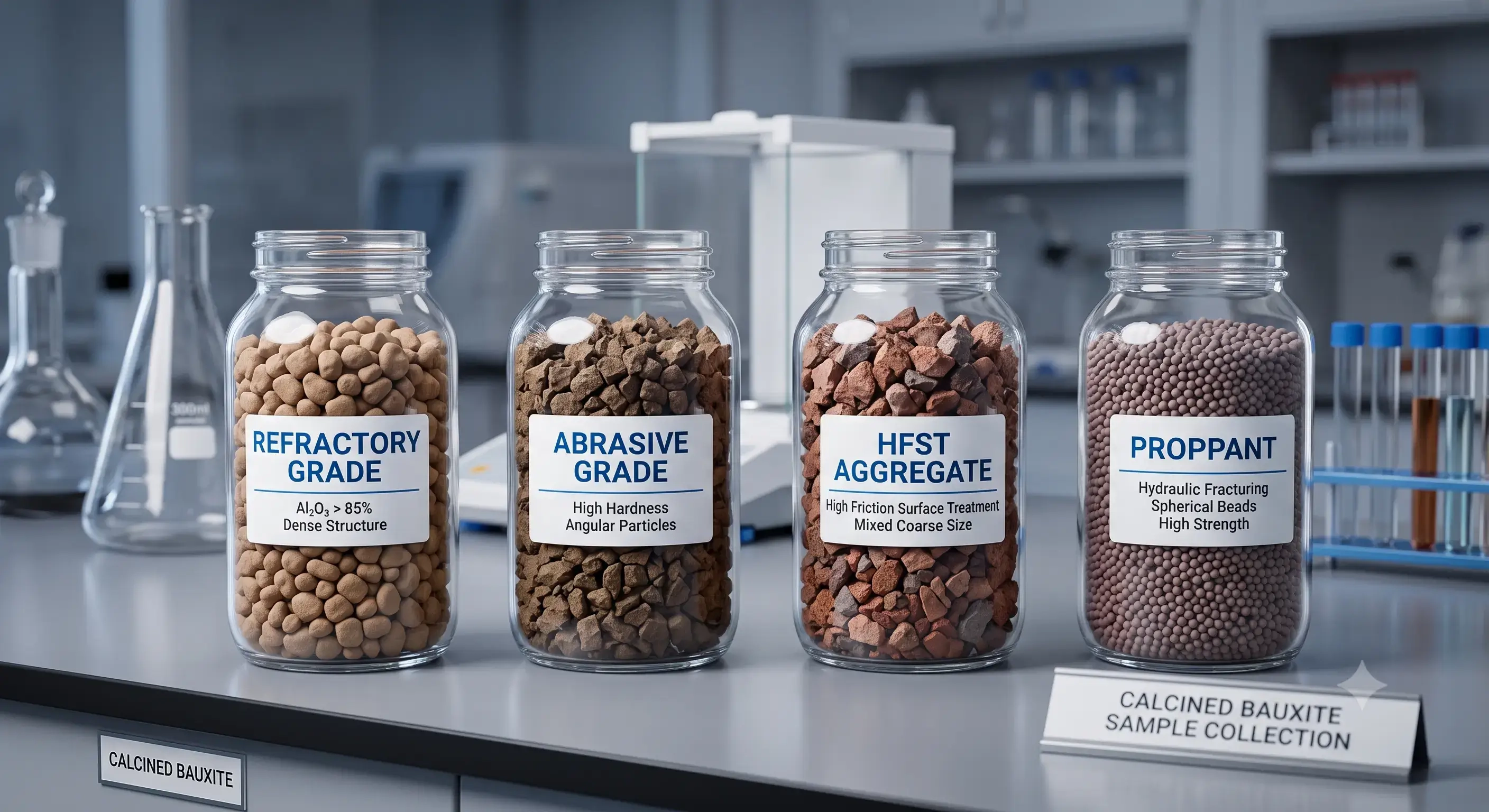
Mastering the Furnace: Understanding what is calcined bauxite and its Production
How do we transform raw, hydrated ore into the dense, robust material industrial buyers need? Through calcination, a complex high-temperature thermal treatment. Calcined bauxite refers to bauxite sintered in specialized kilns, typically rotary, round, or shaft kilns, from ‘light’ calcination (around 1000°C) to ‘hard’ calcination (upwards of 1800°C). This is a profound mineralogical transformation, not just drying.
The main objective is dehydroxylation, the complete removal of physically and chemically bound water. As temperatures rise, hydrated alumina phases (gibbsite, boehmite, diaspore) lose hydroxyl groups, transforming into anhydrous alumina (α-Al2O3). This significantly increases alumina content, often exceeding 85% for high-grade calcined bauxite. Simultaneously, particles densify and sinter, reducing porosity, increasing bulk density, and enhancing hardness and mechanical strength. This controlled inferno recrystallizes the material into a stable, durable ceramic aggregate. The resulting calcined bauxite offers exceptional thermal stability, chemical inertness, and abrasion resistance, crucial for demanding end-uses.
Is there a ‘perfect’ calcination temperature?
Honestly, no single “perfect” calcination temperature exists. The optimal temperature depends entirely on desired end properties and specific applications. Moderately calcined bauxite might suffice for some refractories, balancing density and cost. For extreme volume stability and maximum density, hard-calcined bauxite, sometimes near 1800°C, is essential. Higher temperatures promote greater conversion to alpha-alumina and better mullite formation with silica, leading to superior hot strength and thermal shock resistance. The trade-off is higher energy consumption and production cost. The “perfect” temperature is a moving target, dictated by your application’s performance specs. Understanding these nuances is key to specifying the right material and avoiding over or under-processing.
Beyond the Basics: Tailoring Calcined Bauxite for Specific Industrial Demands
Calcination’s versatility means it’s not a one-size-fits-all process. The degree of calcination, raw bauxite’s mineralogical composition, and precise temperature control tailor the final product for distinct industrial applications. Experienced buyers know “calcined bauxite” isn’t just one product.
For refractory materials, the focus is high alumina, low iron and alkali impurities, and excellent volume stability at extreme temperatures. Hard-calcined bauxite, with its dense, low-porosity structure and high α-Al2O3, minimizes shrinkage and deformation in furnace linings, steel ladles, and cement kilns. Without precise calcination, these components fail prematurely.
For abrasives, properties shift to hardness, toughness, specific particle shapes, and sharp edges for efficient cutting. Calcined bauxite for abrasives optimizes grain morphology for grinding wheels, sandpaper, and blasting media.
Consider High Friction Surface Treatment (HFST) for roadways. Here, calcined bauxite aggregate needs exceptional hardness, angularity, and polishing resistance for long-term skid resistance. It’s a demanding application where consistency and durability directly impact public safety. Similarly, in oil and gas, calcined bauxite is engineered into specialized proppants, crush-resistant spheres holding open hydraulic fractures. These demand incredible crush strength and consistent spherical geometry, entirely dependent on meticulous calcination.
Sourcing generic calcined bauxite for all these applications just won’t cut it. Each requires a specific material profile, showcasing the granular control calcination offers. Understanding your needs and aligning them with the right bauxite grade and calcination level is key. Explore grades and applications: Bauxite Grades and Specifications.
Quality Control and the Supply Chain: What to Look For in Calcined Bauxite Sourcing
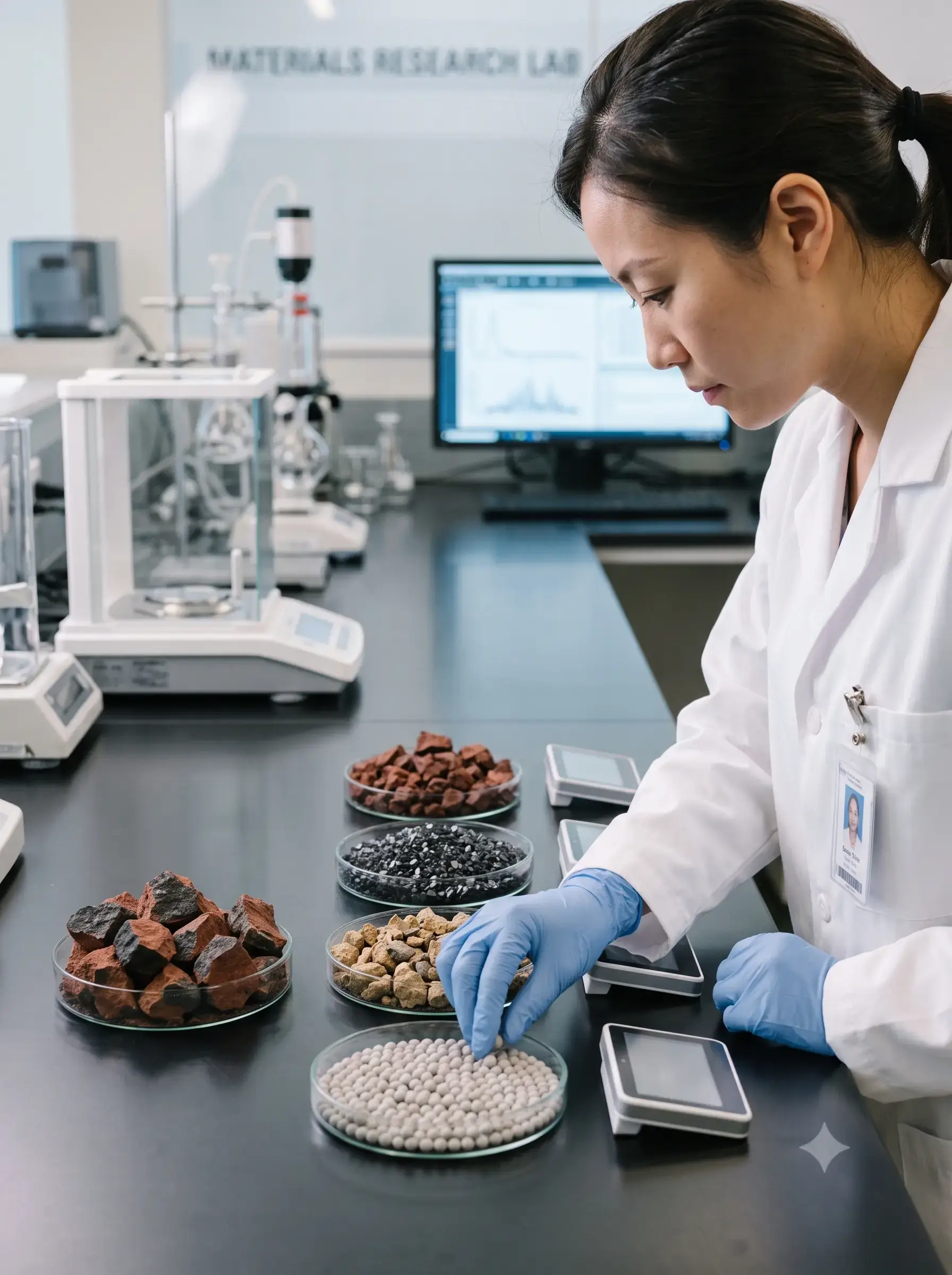
Industrial buyers must ensure consistent quality in every shipment. Knowing your required properties is useless if your supplier can’t consistently deliver, leading to production headaches and financial losses. Demand these core metrics from your supplier:
- Chemical Composition: Primarily Al2O3 content, with critical limits on Fe2O3, SiO2, TiO2, and alkali oxides (Na2O, K2O). Impurities drastically affect performance, acting as fluxes in high-temperature applications and reducing refractoriness.
- Physical Properties: Includes bulk density (crucial for refractories, impacting thermal conductivity and strength), minimal water absorption for hard-calcined grades, Particle Size Distribution (PSD) for consistent mixing, and crushing strength for proppants or HFST.
- Volume Stability: Paramount for refractories, preventing excessive shrinkage or expansion during thermal cycling, which causes cracks.
How much does supplier reputation actually matter?
Reputation matters immensely, far more than often acknowledged. In this industry, it’s built on a long track record of consistent material delivery, risk mitigation, and transparent communication. You’re not just buying a commodity; you’re entering a partnership. Frankly, a good supplier is worth their weight in gold. A consistent supplier means fewer production line surprises. It indicates investment in kilns, quality labs, and personnel. They understand the critical importance of batch-to-batch uniformity in chemical analysis, particle size, and physical performance. For materials underpinning multi-million dollar operations, cutting corners on supplier credibility is a false economy. It’s about risk management as much as specifications.
In the bauxite industry, consistency isn’t a luxury; it’s the bedrock of trust. You can’t afford to have your critical process inputs vary from shipment to shipment.
— A Valbaux Quality Assurance Specialist
Connect with our sales team today to discuss your requirements.
Frequently asked questions
What are the main benefits of using calcined bauxite over raw bauxite?
Calcined bauxite offers significantly higher alumina content, increased density, improved hardness, and superior thermal and chemical stability compared to raw bauxite. These properties are crucial for high-performance industrial applications where raw bauxite’s moisture content and inconsistent structure would cause issues.
How does calcination affect the chemical composition of bauxite?
The primary chemical effect of calcination is the removal of chemically bound water (dehydroxylation), which concentrates the alumina content. While other impurities like silica and iron oxides remain, their relative percentage decreases as the water is driven off, leading to a higher purity alumina product.
What are the typical industrial applications for calcined bauxite?
Calcined bauxite is widely used in refractory materials (bricks, castables), abrasives (grinding wheels, blasting media), proppants for the oil and gas industry, and as aggregates for High Friction Surface Treatment (HFST) on roads due to its hardness and durability.
Are there different grades of calcined bauxite available?
Absolutely. Calcined bauxite is available in various grades, differentiated by alumina content, impurity levels, bulk density, particle size distribution, and the degree of calcination. These grades are tailored to meet the specific performance requirements of diverse industrial applications.
What factors should buyers consider when sourcing calcined bauxite?
Key considerations include chemical composition (especially alumina, iron, silica), physical properties (bulk density, water absorption, particle size), volume stability, consistency of supply, and the supplier’s quality control processes and reputation. Matching the material’s properties precisely to your application is critical.